

Imagine a frustrated customer mid-journey with your brand. An AI chatbot promises quick resolution. But loops endlessly on scripted responses, eroding trust and spiking churn by 30% in seconds. This vivid derailment—rooted in disconnected tech and human empathy—highlights why CX fails without movement-building. Enter Katie Stabler CCXP, Cheshire-based CX specialist, keynote speaker, and bestselling author of CX-ISM. With over a decade in experience design, she founded CULTIVATE Customer Experience by Design. Now it is in its fifth year of global operations. She is elping organizations unlock measurable transformation through psychology, data, and culture. Katie is a top global CX influencer and Certified Customer Experience Professional (CCXP). Her expertise signals unmatched E-E-A-T. Her proven frameworks have driven ROI in finance, nonprofits, and tech, turning strategies into employee-led movements that humanize digital interactions.
Katie Stabler: Turning Strategy into Company-wide Movement
Q1. What CX win surprised you most in turning strategy into a company-wide movement?
KS: Wins!!!
When a company evolves its approach to customer experience beyond a strategy, organisations stop experiencing the challenges of failed initiatives, struggles in identifying return on investment, and difficulty in getting a stakeholder’s buy-in.
Nurturing a company-wide movement of customer centricity involves broadening the entire workforce’s understanding of what customer experience really is, what it means to the business and what impact each individual has on customer experience. Customer experience stops being a thing you have to do and instead becomes part of the organisation’s DNA.
Q2. How has psychology of customer perception shaped your CX-ISM framework?
KS: The psychology of customer experience is at the very core of the CX-ISM framework. So few organisations are tapping into the benefit of this understanding, but as soon as a company understands the complexity of customer experience, how human behaviour is influenced and therefore how consumer behaviour is influence they become so much more adept at designing and managing experiences that deliver commercial benefit.
Katie Stabler: Shifting from Customer Service Roles to Founding CULTIVATE
Q3. What first sparked your shift from customer service roles to founding CULTIVATE?
KS: Like many, my youth consisted of customer service roles from retail to contact centres. I then spent a decade in the not-for-profit sector Supporting some of the U.K.’s most vulnerable people, and it was here where I believe my customer experience journey began. Whilst I did not have CX in my role titles, I consider not-for-profits to be the most organically customer experience-focused organisations there are. It was here working as the deputy chief executive for a debt support charity, that I first stepped into the world of what is formally known as customer experience when I was asked to be the head of customer experience for Europe second largest debt collection company.
I spent a couple of years in corporate, then moved to the director of a customer experience for a membership company, and it was about two years later that I set up my own company, CULTIVATE. I wish I could tell you, I always dreamed of setting up my own business, and it was a dream come true. That’s not the case. I was actually made redundant, and the truth is, an opportunity fell into my lap for a great role, but which required the setting up of my own business, and thus my Founder journey began, and I have never looked back.
How to Spot Cultural Barriers: Insights from Katie Stabler
Q4. How do you spot cultural barriers blocking sustainable CX transformation early?
KS: It’s easy, I get to know the organisation I work with.
Yes, I have a trademark to methodology which I support organisations with, but this isn’t a concrete framework which each client fits into. It’s quite the opposite. It is a bespoke approach which guides people through an expertly created pathway formulated entirely around their challenges and requirements. It’s essential, no matter which section of the pathway they enter, that cultural blockers are identified quickly, enabling us to ensure that addressing them is part of the project.
Q5. What role does data play in designing experiences that feel intuitively human?
KS: You simply can’t design experiences without data and insight.
Many of the problems organisations face are the natural bias to believe our assumptions of what the lift experience is believed to be, versus what it actually is. In order to succeed in creating a suitable customer experience strategy and eventually commercially viable customer experiences, Organisations need to use real-time data to leverage insight which guides decision-making.
How to Build Employee Buy-in: Katie Stabler
Q6. How do you build employee buy-in for CX as a “movement you lead,” not just implement?
KS: There are many different approaches to doing this but two fundamentals which I advocate for strongly are:
1. Develop all of your employees’ knowledge and understanding of what customer experience really is. I’m talking about the psychology of customer experience. The training alone does a number of things. Yes, it builds understanding, but it also builds confidence, and when delivered organisation-wide, it demonstrates the prioritisation that you as a company are placing on CX.
2. Engage employees at all levels. As a minimum, this should be a well-planned Comms strategy, but mature organisations should be building customer champion communities, leading customer forum and engaging a variety of stakeholders in the continual design and evolution of CX
Leadership is the Key
Q7. What frameworks reconcile short-term CX wins with long-term cultural shifts?
KS: I don’t believe frameworks do this; I think leaders do this. Adapt leaders will know what needs to be achieved and what can be achieved in the short term, and especially in the world of CX, what needs to be done to nurture those longtime cultural shifts.
Q8. How do you measure if a CX initiative has truly become an organizational movement?
KS: To get an in-depth answer, readers will have to talk to me about engaging my consultancy! But over and above traditional metrics, one of the biggest indicators of CX truly becoming a movement is that companies move away from piecemeal projects and instead CX activities become prioritised and resourced BAU (Business as usual).
Balancing Automation Efficiency with Emotional Connection
Q9. In AI-orchestrated models, how do you balance automation efficiency with emotional connection?
KS: Simple, adopt AI and any form of supportive technology underneath a thought-out and well-designed strategy, which is influenced heavily by customer experience. Don’t approach AI adoption as a cost-saving initiative. Approach it with the intention to solve a challenge or create an opportunity. This way, you will likely make improvements and see efficiencies as a byproduct.
Q10. What metrics prove agentic AI scales CX ROI without inflating costs?
KS: Agentic AI proves it scales CX ROI without inflating costs when organisations measure outcomes, not activity: falling cost per resolved outcome as volumes rise; improving first-contact resolution and lower repeat contacts (showing work is absorbed, not deflected); reduced customer and agent effort through fewer steps, lower ACW, and smoother AI-to-human handoffs; more consistent emotional outcomes such as confidence and trust across journeys; protected or improved revenue signals like save rates, retention, and post-AI conversion; stronger agent enablement ROI via faster time-to-competency, better decision quality, and lower attrition; and, critically, a flattening marginal cost of growth, where additional interactions no longer drive linear staffing or infrastructure increases, when these metrics move together, AI is delivering CX-led ROI rather than cost-cutting automation.
Katie Stabler on How to Reconcile CX-cost Conflicts
Q11. How do you reconcile CX-cost conflicts when executives prioritize budgets over empathy?
KS: You reconcile CX–cost conflicts by reframing empathy as a commercial discipline, not a moral nice-to-have: start by anchoring empathy to economic outcomes (cost-to-serve, repeat contact, churn, rework, complaints, attrition), then show where lack of empathy is already inflating costs through friction, failure demand, and recovery spend; shift the conversation from “being nicer” to designing experiences that reduce effort, prevent escalation, and protect value; prioritise empathy at high-leverage moments (peaks, failures, trust breaks) rather than everywhere; pilot small, controlled changes that demonstrate measurable impact fast; and speak the language executives use—risk, margin, predictability, scalability—while holding a clear line that cutting empathy rarely removes cost, it just moves it downstream. When leaders see empathy lowering volatility and stabilising performance, it stops being a values debate and becomes a business decision.
When CX Design Integrates Design Thinking with Behavioral Science
Q12. What outcomes emerge when CX design integrates design thinking with behavioral science?
KS: When CX design integrates design thinking with behavioral science, the outcome shifts from well-intentioned experiences to predictable behaviour change: journeys become easier to complete because they align with how people actually think under pressure; effort drops as friction, cognitive overload, and uncertainty are intentionally removed; trust increases because expectations, language, and cues are designed to reduce threat and ambiguity; adoption and compliance improve without force because customers feel guided rather than pushed; emotional consistency rises across channels and moments, reducing experience volatility; and commercially, organisations see lower failure demand, higher resolution rates, stronger retention, and more sustainable ROI—because experiences are no longer just empathetic and creative, they are psychologically aligned, decision-aware, and behaviourally effective.
Q13. How will emerging tech like agentic AI redefine CX leadership by 2027?
KS: I hope it won’t. This kind of technology should support design and delivery, not leadership.
Q14. What one framework would you deploy tomorrow to 10x CX loyalty in legacy firms?
KS: My CX-ISM Framework. Designing customer and employee experiences at the intersection of human psychology, neuroscience, and commercial reality — where behaviour changes and culture growth follow.
Cultivating Movements Resilient to Economic Volatility
Q15. Looking ahead, how can CX leaders cultivate movements resilient to economic volatility?
KS: CX leaders cultivate movements resilient to economic volatility by anchoring customer experience as a shared belief system, not a discretionary programme: they root CX in purpose and principles that guide decisions when budgets tighten, design for behavioural consistency rather than perfection, and focus relentlessly on reducing effort, failure demand, and experience volatility—the hidden cost drivers that spike in downturns; they build distributed ownership so CX lives in everyday choices, not central teams; they prioritise high-impact moments that protect trust, confidence, and retention; they use data to tell a commercial story of stability and risk reduction, not just satisfaction; and they invest in human capability alongside technology so people can adapt, not freeze, under pressure. Movements survive uncertainty because they are values-led, evidence-backed, and woven into how the organisation thinks—long after strategies are paused and budgets are reset.
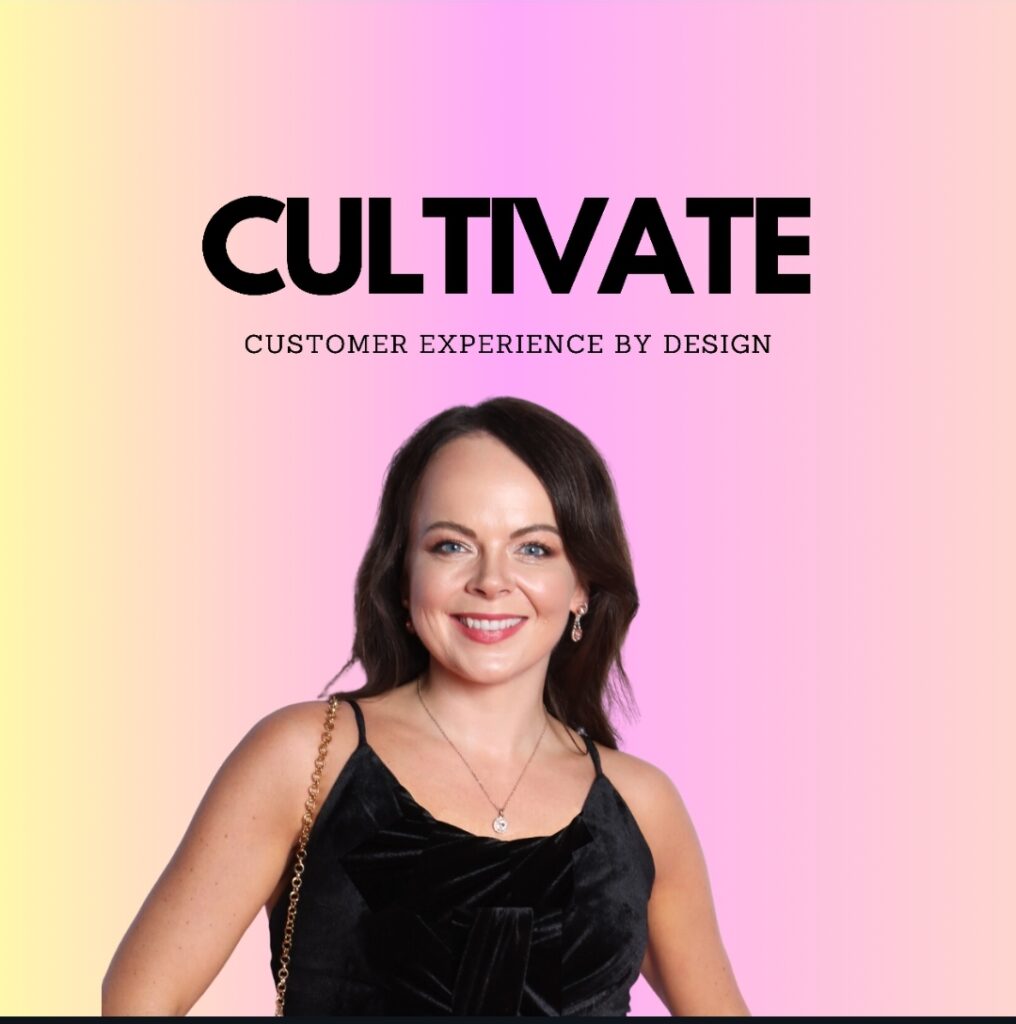
Katie Stabler: CX Evolves from Tactic to Transformative Movement
Katie Stabler CCXP unpacks how CX evolves from tactic to transformative movement, blending psychology, data, and culture for measurable wins. Key insights include spotting cultural barriers early. By using CX-ISM to humanize AI interactions, and metrics proving agentic AI boosts ROI amid cost pressures. Her frameworks empower strategic leaders to lead empathy-driven shifts, reconciling budgets with emotional loyalty for 10x outcomes. Dive deeper into AI in CX at CXQuest.com/ai-cx-hub, CX leadership frameworks at CXQuest.com/leadership-hub, and transformation stories at CXQuest.com/transformation-stories. Subscribe now for exclusive interviews—download her CX-ISM takeaways and join the movement shaping tomorrow’s CX giants. What’s your next CX win? Comment below or connect on LinkedIn.
