
From Quiz to Cross-Border Experience: What CX Leaders Can Learn from the Indo-Albanian Discovery Challenge
A moment that felt bigger than a quiz
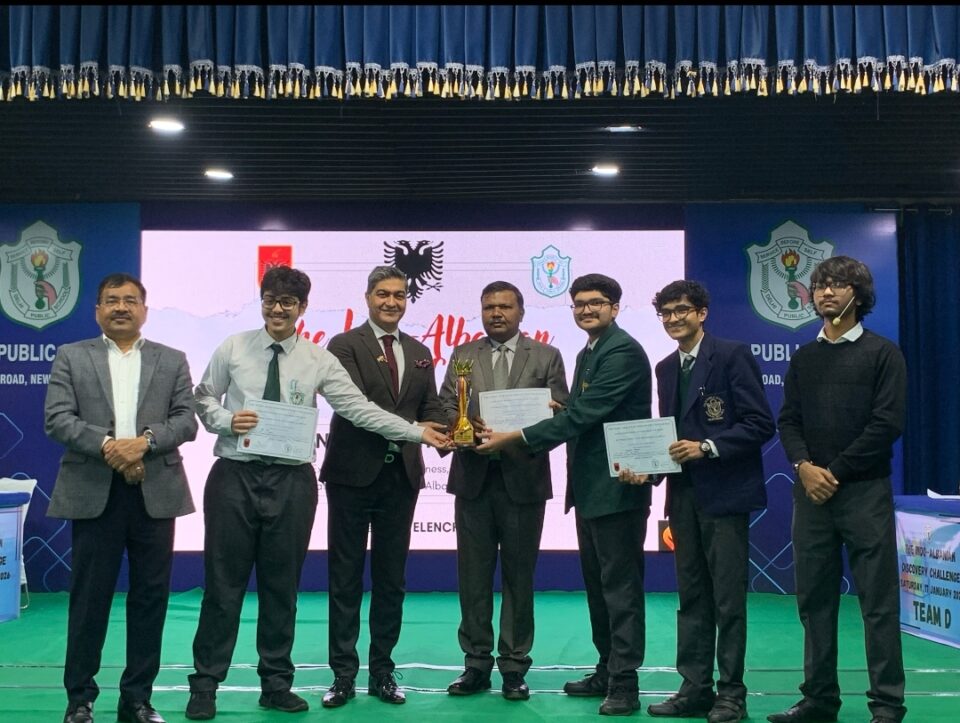
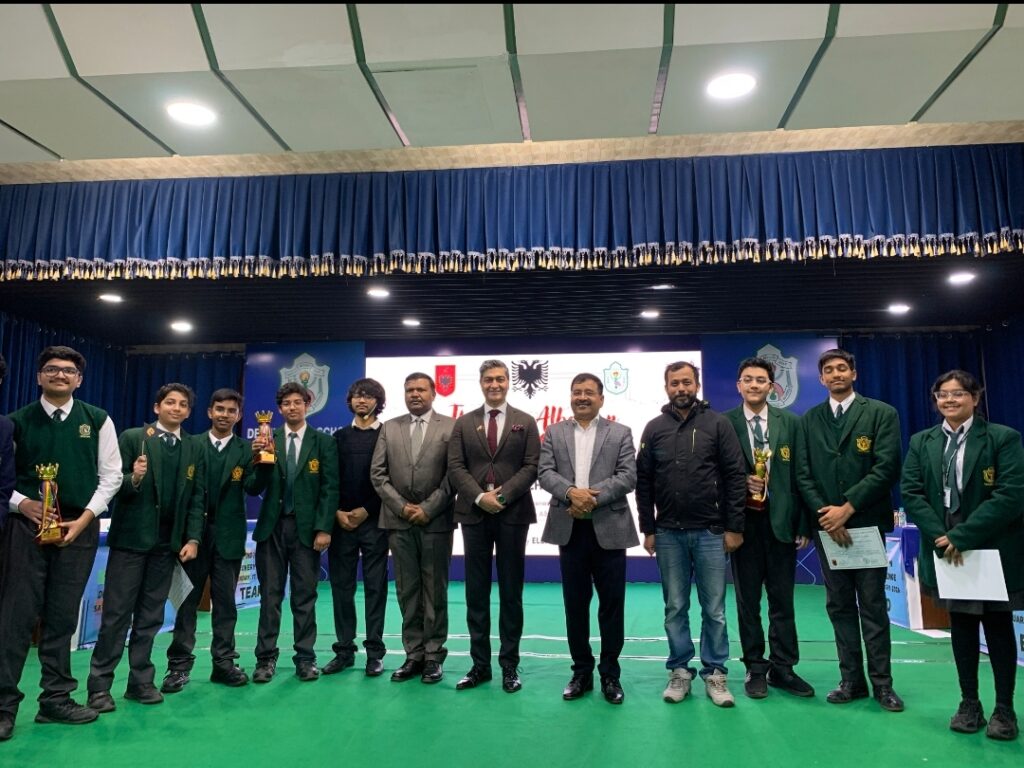
Imagine a school auditorium buzzing with 200 teenagers.
Not anxious.
Not distracted.
Curious.
They are not here for grades.
They are here to discover a country most had never seriously thought about.
And, they are here to compete, collaborate, and listen to diplomats.
This was not a customer event.
Yet, every CX leader should pay attention.
Because what unfolded at Delhi Public School, Mathura Road during the Indo-Albanian Discovery Challenge is a masterclass in experience orchestration, journey design, and human-centered engagement at scale.
No CRM.
No AI chatbot.
Above all, no automation stack.
And still, the experience worked.
What Is Experience-Led Engagement, and Why CX Leaders Need It?
Experience-led engagement is the intentional design of emotional, cognitive, and social touchpoints that create meaning beyond transactions.
For CX leaders, it matters because loyalty, trust, and advocacy are built through memory, not metrics alone.
The Indo-Albanian Discovery Challenge proves this in a non-commercial context.
Yet its principles translate directly into enterprise CX and EX programs.
Why This Event Is a CX Case Study in Disguise
At first glance, this was a quiz competition.
At a deeper level, it was a multi-stakeholder experience ecosystem.
Consider the complexity:
- 200 students
- 30+ schools
- Diplomats
- Education boards
- Government officials
- Cultural objectives
- Youth engagement goals
This is not unlike a large enterprise CX initiative involving customers, partners, regulators, and internal teams.
The success did not come from technology.
It came from experience alignment.
What Problem Was Really Being Solved?
The core problem was not lack of information about Albania.
It was lack of emotional connection.
CX leaders face the same issue daily:
- Customers know your product
- Employees know your policies
- Partners know your processes
But they do not feel invested.
The Discovery Challenge reframed learning as:
- Exploration, not instruction
- Participation, not consumption
- Dialogue, not delivery
That shift is the essence of modern CX.
How Experience Design Replaced Siloed Thinking
Silos collapse when the experience becomes the shared goal.
In this initiative:
- Schools aligned around student curiosity
- Diplomacy aligned around people-to-people connection
- Government aligned around educational outreach
- Students aligned around discovery and competition
No single stakeholder dominated the narrative.
For CX leaders battling silos, this is instructive:
- The experience became the operating system
- Roles became enablers, not owners
This mirrors what high-performing CX organizations do differently.
What CX Leaders Can Learn from the Event Architecture
1. A Clear Experience Promise
The unspoken promise was simple: “You will leave knowing the world is bigger than you thought.”
CX takeaway:
- Define a one-line experience promise
- Make every touchpoint serve that promise
2. Designed Emotional Peaks
The presence of diplomats and dignitaries created a sense of importance.
Students felt seen.
Their curiosity felt validated.
CX takeaway:
- Identify emotional peaks in your journey
- Design moments of recognition, not just resolution
3. Participation Over Passive Consumption
This was not a lecture.
It was interactive, competitive, and social.
CX takeaway:
- Replace passive touchpoints with co-creation moments
- Let customers and employees do, not just receive
4. Narrative Over Information
Albania was introduced as:
- A culture
- A history
- A future partner
Not as a list of facts.
CX takeaway:
- Replace feature-led messaging with story-led framing
- Humans remember stories, not specifications
Where Many CX Programs Go Wrong
They mistake activity for experience.
Common pitfalls include:
- Launching tools without journey clarity
- Measuring satisfaction without emotional insight
- Scaling automation before trust is built
- Treating stakeholders as audiences, not participants
The Indo-Albanian Discovery Challenge avoided these traps by anchoring everything in purpose.
A Simple Framework: The C.U.R.I.O.S.I.T.Y. Model
CXQuest leaders often ask for practical frameworks.
Here is one inspired by this event.
C.U.R.I.O.S.I.T.Y.
- Clarity of intent
- Understanding the audience
- Rituals that create belonging
- Interaction over instruction
- Ownership shared across stakeholders
- Story-driven design
- Intentional emotional peaks
- Transferable learning
- Yield beyond the moment
Use this to audit:
- Customer journeys
- Employee onboarding
- Partner programs
- Community initiatives
Why Emotion Is the Real CX Differentiator
Dr. Ram Singh’s remarks emphasized learning beyond textbooks.
That matters.
Emotion turns information into identity.
Students did not just learn about Albania.
They felt:
- Curious
- Respected
- Globally connected
CX leaders often underinvest in emotional outcomes because they are hard to measure.
Yet emotion drives:
- Memory
- Advocacy
- Trust
- Long-term loyalty
The Role of Leadership Presence in Experience Design
The presence of the Honorary Consul General and MEA officials sent a powerful signal.
This was not symbolic.
It was experiential leadership.
CX takeaway:
- Leadership visibility is a design choice, not a formality
- Presence communicates priority more than any internal memo
In enterprise CX, this translates to:
- Leaders joining journey reviews
- Executives engaging directly with frontline stories
- CX not being delegated away
What This Means for AI, Automation, and Tech-Heavy CX
There was no AI here.
Yet the experience worked.
That does not mean AI is unimportant.
It means technology must amplify meaning, not replace it.
For CX leaders:
- Use AI to remove friction
- Use humans to create connection
- Design journeys where tech supports emotion
The future of CX is human-led, tech-enabled.
Common Pitfalls CX Leaders Should Avoid
- Designing journeys without a shared narrative
- Measuring touchpoints instead of moments
- Scaling tools before trust
- Treating CX as a department, not a mindset
- Ignoring cultural and contextual nuance
The Discovery Challenge succeeded because it respected context.
How This Case Applies to Enterprise CX and EX
This model applies to:
- Global customer communities
- Partner ecosystems
- Employee engagement programs
- Learning and development initiatives
Anywhere you need:
- Alignment without authority
- Engagement without incentives
- Loyalty without contracts
Key Insights for CXQuest Leaders
- Experience is an ecosystem, not a funnel
- Emotion precedes advocacy
- Participation creates ownership
- Leadership presence accelerates trust
- Culture is a CX lever, not a constraint
Frequently Asked Questions
How is this relevant to corporate CX teams?
Because the principles of experience design apply across education, government, and business. Humans respond the same way everywhere.
Can this work at scale?
Yes, if the experience promise is clear and stakeholders align around it.
Where does AI fit into this model?
AI supports efficiency. Experience design creates meaning. Both are necessary.
How do you measure success in experience-led initiatives?
Track memory, advocacy, participation, and narrative recall, not just satisfaction.
Is this approach suitable for regulated industries?
Yes. In fact, regulated environments benefit most from human-centered experience design.
Actionable Takeaways for CX Professionals
- Write a one-line experience promise for your top journey.
- Identify three emotional peaks and design them intentionally.
- Replace one passive touchpoint with a participatory moment.
- Involve leadership in one live CX interaction each quarter.
- Audit your journey using the C.U.R.I.O.S.I.T.Y. framework.
- Balance AI efficiency with human connection.
- Measure memory and advocacy, not just satisfaction.
The Indo-Albanian Discovery Challenge reminds us of something CX leaders often forget.
People do not remember processes.
They remember how an experience made them feel.
And that is where real CX leadership begins.
