
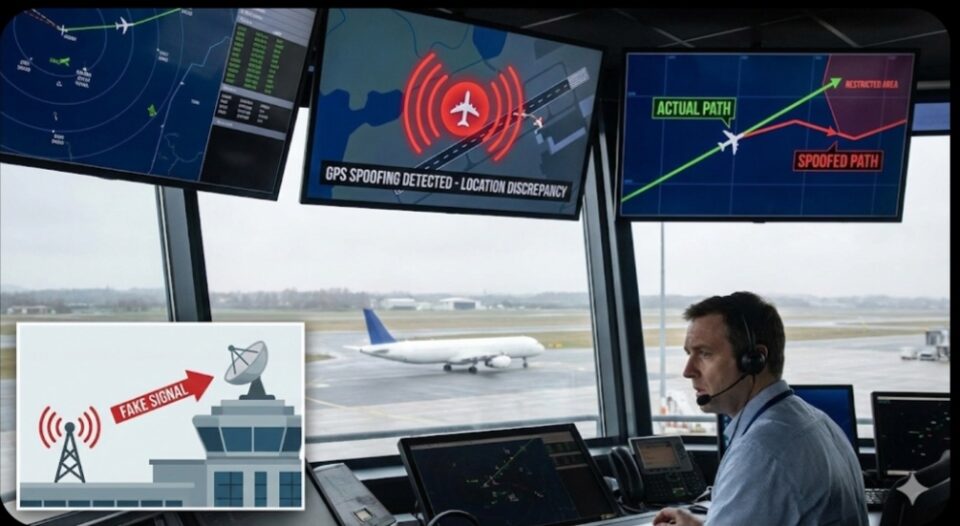
When Digital Trust Takes Flight: What India’s Airport GPS Spoofing Incident Means for CX Leaders
Your passengers are boarding. Systems show green. Air traffic controllers are ready. Then suddenly, GPS signals start lying. This isn’t a Hollywood screenplay. It happened at seven major Indian airports in November 2025. Delhi, Mumbai, Bengaluru, Kolkata, and Hyderabad all confirmed cyber attacks involving GPS spoofing. False navigation signals targeted aircraft during landing procedures.
No flights crashed. Operations continued. But the incident exposed something far more dangerous than a technical glitch.
It revealed how fragile customer trust becomes when invisible systems fail.
The Invisible Infrastructure Behind Every Journey
Modern aviation runs on digital trust. Passengers don’t see the GPS guiding their plane to Runway 10. They don’t understand GNSS interference or what “spoofing” means. They simply expect to land safely.
When that expectation wobbles, even slightly, the customer experience cracks.
The Indian government confirmed that multiple flights approaching Indira Gandhi International Airport reported GPS spoofing while using GPS-based landing procedures. Pilots switched to contingency protocols. Controllers shifted to manual operations. Passengers noticed nothing unusual during their flights.
But here’s what they did notice: Over 800 flights delayed at Delhi airport around the same period due to related technical issues. Long queues at boarding gates. Minimal communication. Confusion spreading through terminals.
The GPS spoofing didn’t disrupt operations. The system vulnerabilities it exposed did.
A Global Crisis Accelerating at Alarming Speed
GPS spoofing isn’t isolated to India. It’s becoming aviation’s fastest-growing operational nightmare.
The International Air Transport Association reports GPS spoofing incidents spiked 500% between 2023 and 2024. Interference rates surged 175% during the same period. By 2024, roughly 1,500 flights daily experienced spoofing, compared to just 300 in early 2024.
Civil Aviation Minister Ram Mohan Naidu told Parliament that since reporting became mandatory in November 2023, interference reports have flooded in from Kolkata, Amritsar, Mumbai, Hyderabad, Bengaluru, and Chennai airports.
The scale is staggering. The implications for customer experience are profound.
Where Customer Experience Breaks Down
Think about what passengers value most. Speed ranks first for 53% of UK air travelers. Only 36% prioritize data security. Convenience trumps caution.
Until something goes wrong.
GPS spoofing creates cascading CX failures that extend far beyond navigation errors:
Communication vacuums emerge. When systems fail, passengers get left in the dark. During Delhi airport’s technical disruptions, travelers complained about unreachable customer service. Inconsistent updates. No transparency about delays approaching two hours.
Operational friction multiplies. Air traffic controllers must manually prepare flight plans when automation fails. This time-consuming process creates bottlenecks. Flights stack up. Passengers miss connections. Frustration compounds.
Trust erodes invisibly. Even when operations continue normally, the mere news of GPS spoofing incidents damages brand credibility. Aviation depends on absolute confidence in safety systems. Any hint of vulnerability shakes that foundation.
Delta Airlines learned this lesson expensively. A July 2024 cyber incident cost them $550 million. The direct revenue impact from cancellations and refunds hit $380 million. Non-fuel expenses added $170 million more.
The financial toll was massive. The reputational damage? Harder to quantify but potentially longer-lasting.
The Employee Experience Dimension
CX professionals often forget that customer experience depends entirely on employee experience. When systems fail, frontline staff bear the brunt.
Air traffic controllers faced overwhelming workload during India’s GPS spoofing incidents. Manual flight plan preparation. Heavy radio communication. Constant vigilance for navigation anomalies. The cognitive load becomes unsustainable.
Pilots must recognize spoofing signals while managing aircraft. Cabin crew handle anxious passengers without clear information. Ground staff process delays without adequate system support.
One senior pilot explained the challenge: “When spoofing occurs, it degrades aircraft navigation capabilities. Controllers must manually maintain safe separation between planes. The radio communication and workload become enormous.”
This employee pressure translates directly into degraded customer interactions. Stressed teams make mistakes. Communication breaks down. Service quality suffers.
Aviation companies investing in cybersecurity training see measurable results. Studies show 40% reduction in phishing-related breaches and 30% improvement in threat response with robust training programs. Companies with comprehensive cyber training contain breaches 27% faster than those without.
Yet 85% of aviation cyber professionals identify insider threats as the greatest risk. Not malicious insiders necessarily. Simply undertrained employees making preventable mistakes.
What Makes GPS Spoofing So Dangerous for CX
GPS spoofing works by transmitting fake signals that overpower legitimate satellite data. Aircraft instruments suddenly show incorrect positions. During Delhi incidents, flight data revealed abnormal parameters. Aircraft positions fluctuated by as much as 335 kilometers within seconds.
The Navigation Integrity Category value, measuring GPS accuracy, dropped from normal levels of 8 to complete unreliability at 0.
For passengers, this manifests as:
Unpredictable delays. When pilots must switch navigation methods mid-approach, landing sequences get disrupted. Schedules collapse. Connection times evaporate.
Safety anxiety amplified. News coverage mentioning “cyber attacks” on airports triggers passenger fear. Even when operations remain safe, perception drives behavior. Bookings decline. Brand loyalty weakens.
Compounded frustration. Technical issues rarely occur in isolation. The same November period that saw GPS spoofing at Delhi also featured an Airbus software recall affecting 388 flights in India. Multiple disruptions create cumulative damage to customer confidence.
Aviation bodies now treat GPS spoofing as a critical safety hazard. The International Civil Aviation Organization updated standards. Between 2021 and 2024, reported GPS signal loss and spoofing cases increased 220% globally.
The Trust Equation in Aviation CX
Trust operates differently in aviation than other industries. Passengers must trust invisible systems. They board aircraft understanding they have zero control over outcomes. This complete vulnerability makes trust both essential and fragile.
Research on airline crisis management reveals that perceived crisis management capability significantly influences passenger brand attitudes, brand credibility, and intention to use airlines. Crisis management isn’t just operational. It’s fundamentally a CX function.
When cyber incidents occur, airlines face three types of damage:
Financial losses from refunds, compensation, crew costs, and operational downtime. The average data breach in the U.S. costs $4.44 million.
Operational disruptions affecting system availability, recovery time, and asset integrity. Ransomware incidents in aviation surged 600% year-over-year.
Reputational harm eroding customer trust, damaging partnerships, and creating lasting brand perception problems. This damage often exceeds measurable financial impacts.
The Cathay Pacific breach in 2018 compromised 9.4 million passenger records. The airline faced a £500,000 fine. But the reputational damage and customer trust erosion proved far more costly than regulatory penalties.
Building Cyber-Resilient Customer Experiences
Forward-thinking CX leaders recognize that cybersecurity isn’t just an IT problem. It’s a customer experience imperative.
Operational resilience determines CX resilience. Airports must implement cross-trained teams, dynamic rostering, integrated systems, and predictive analytics. When one system fails, trained staff can pivot to alternatives without service degradation.
The Airports Authority of India has requested the Wireless Monitoring Organisation to identify spoofing sources. They’ve directed additional resources to investigate suspected transmission zones. These aren’t just security measures. They’re CX protection strategies.
Communication strategies make or break crisis response. Transparency, timeliness, and empathy define effective crisis communication. Airlines that prioritize these elements maintain customer trust even during disruptions.
Alaska Airlines demonstrated this during an emergency landing incident. They prioritized transparency with prompt acknowledgments and timely updates. They showed empathy and offered support to affected passengers. Plus, they ensured accessibility by actively monitoring and responding across communication platforms.
Indian aviation authorities could learn from this playbook. During the GPS spoofing incidents, communication gaps created unnecessary passenger anxiety.
Technology backup systems provide CX continuity. India maintains a Minimum Operating Network of conventional ground-based navigation and surveillance systems. This redundancy model, used globally, ensures operations continue when satellite systems fail.
Backup systems aren’t glamorous. Passengers never see them working. But they’re the invisible insurance policy protecting customer experience during technical crises.
What CX Professionals Must Understand About Aviation Cybersecurity
The GPS spoofing incidents reveal broader truths about CX in digitally dependent industries:
Invisible systems create visible customer pain. Most passengers can’t explain how GPS works. They don’t need to. They expect it to work flawlessly. When invisible infrastructure fails, customer experience collapses regardless of technical details.
Prevention costs less than recovery. The Directorate General of Civil Aviation issued Standard Operating Procedures mandating real-time reporting of GPS spoofing incidents. Airlines must report occurrences within 10 minutes. This proactive approach enables faster response and minimizes customer impact.
Employee preparedness protects customer experience. Cross-training, scenario-based simulator sessions, and regular training updates ensure crews can handle navigation anomalies. Prepared employees deliver better customer experiences under pressure.
Transparency builds resilience. Airports that openly acknowledge vulnerabilities and communicate mitigation efforts maintain customer confidence better than those attempting to minimize incidents.
The aviation sector contributes 5% of GDP in countries like the United States, generating $1.9 trillion in economic activity and supporting 11 million jobs. Cybersecurity threats affecting this sector have risen 74% since 2020.
The stakes extend far beyond individual airline brands. They encompass national infrastructure, economic stability, and public safety.
The Regulatory Response and Its CX Implications
The European Union Aviation Safety Agency introduced Part-IS regulations mandating comprehensive cybersecurity training for all employees handling sensitive data. By October 2025, qualifying personnel must receive training on recognizing, preventing, and responding to cyber threats.
This regulatory push reflects industry-wide recognition that cybersecurity gaps threaten operational continuity and customer experience.
India’s response includes enhanced monitoring, investigation coordination between agencies, and upgraded cybersecurity protocols. The Airports Authority of India is implementing advanced cybersecurity solutions for IT networks and infrastructure according to National Critical Information Infrastructure Protection Centre guidelines.
These technical measures protect operational systems. But they also safeguard the customer experience that depends on those systems functioning flawlessly.
Emerging Solutions and Future Directions
Aviation technology companies are developing real-time GPS interference detection solutions. These systems provide near-instant alerts when aircraft encounter GPS anomalies, enabling crews to verify navigation system integrity and switch to backup methods.
Anti-spoofing technologies include:
Multi-constellation GNSS reception combining GPS with Galileo, GLONASS, and BeiDou systems. Diversified signal sources make spoofing attacks harder to execute successfully.
Advanced antenna systems capable of detecting signal anomalies and rejecting false transmissions.
Encrypted or authenticated signals like Galileo PRS and GPS M-code offering cryptographic protections against manipulation.
Machine learning-based detectors identifying subtle signal anomalies that traditional systems miss.
Receiver Autonomous Integrity Monitoring using redundant satellite measurements to check consistency and alert pilots when positional errors exceed tolerances.
These technical solutions create the foundation for reliable customer experiences. But technology alone isn’t sufficient.
The Cultural Shift Required
Building cyber-resilient customer experiences requires cultural transformation across aviation organizations:
Security becomes everyone’s responsibility. From C-suite executives to frontline staff, every employee must understand their role in protecting systems and customer experiences.
Proactive preparation replaces reactive response. Organizations implementing five-phase preparation roadmaps—assess, plan and document, remediate and implement, validate and report, monitor and maintain—perform better during crises.
Cross-functional collaboration strengthens resilience. IT departments, operations teams, customer service functions, and executive leadership must align around cybersecurity priorities.
Continuous improvement sustains competitive advantage. Cyber threats evolve constantly. Training programs, technology systems, and response protocols must evolve equally fast.
The aviation industry has an impressive record of overcoming challenges and emerging stronger. The GPS spoofing incidents represent one more test of that resilience.
Practical Takeaways for CX and EX Leaders
The GPS spoofing incidents at Indian airports offer specific lessons for customer and employee experience professionals:
Map your invisible infrastructure. Identify digital systems your customers depend on without knowing they exist. Assess vulnerability points. Develop contingency plans for each critical system.
Build communication protocols before crises hit. Create templates for transparency-focused crisis communication. Train teams on empathetic messaging. Establish clear escalation paths for rapid information dissemination.
Invest in employee cyber literacy. Beyond basic training, develop role-specific cybersecurity competencies. Ensure frontline staff understand how to recognize threats and respond appropriately.
Design redundancy into customer journeys. Every critical touchpoint should have backup systems or alternative processes. When primary systems fail, customer experiences shouldn’t collapse.
Measure trust as a leading indicator. Track passenger confidence metrics alongside operational KPIs. Trust erosion often precedes revenue decline and market share loss.
Collaborate across industry boundaries. Join information-sharing platforms like IATA Aviation Cyber Threat eXchange. Learn from incidents affecting competitors. Contribute insights that strengthen sector-wide resilience.
Treat cybersecurity as a CX investment, not a cost center. The average cyber incident costs aviation companies over $1 million. Reputational damage adds unquantifiable secondary impacts. Prevention delivers measurable ROI.
Create scenario-based training for crisis situations. Simulator sessions teaching crews to handle GPS denial scenarios prepare teams for real incidents. Similar training benefits customer service teams managing passenger anxiety during disruptions.
The Bottom Line for Customer Experience
The Indian airport GPS spoofing incidents didn’t crash any planes. They didn’t cancel hundreds of flights. In operational terms, the impact remained minimal.
But they exposed how quickly customer trust evaporates when invisible infrastructure wobbles.
Modern CX leaders must recognize that digital systems create both opportunity and vulnerability. The same technology enabling seamless journeys can collapse customer confidence when compromised.
Aviation operates at the intersection of safety, technology, and human psychology. Passengers entrust their lives to systems they don’t understand. That complete vulnerability makes aviation CX uniquely challenging and uniquely important.
The GPS spoofing incidents serve as a warning signal. Not just for aviation. For every industry where customers depend on invisible digital infrastructure.
When systems fail, transparency, preparation, and empathy determine whether customer relationships survive the crisis. Organizations that understand this reality today will lead their industries tomorrow.
The skies above India remain safe. GPS spoofing hasn’t caused accidents. But customer experience professionals know that perception often matters more than reality.
In aviation, trust flies at 30,000 feet. Once it falls, rebuilding takes far longer than the descent.
