

In an era where digital transformation drives financial innovation, the security foundation of these institutions including AI-driven cybersecurity in financial services is being tested like never before. Cyber adversaries have evolved — from opportunistic hackers to sophisticated, AI-enabled actors exploiting every weakness across cloud, identity, and data layers. As the financial services sector stands on the frontlines of this new-age warfare, the conversation has shifted from compliance to resilience — from ticking regulatory checklists to anticipating threats before they escalate into business-impacting incidents.
Securonix, a global leader in cybersecurity analytics, has been instrumental in redefining how organizations detect and respond to cyber threats. With its Unified Defense SIEM powered by agentic AI, the company is setting new industry benchmarks for precision, speed, and automation. Trusted by global banks and financial giants, including HDFC Bank, Securonix’s cloud-native platform delivers behavioral insights and actionable intelligence, enabling CISOs to protect their digital ecosystems proactively especially AI-driven cybersecurity in financial services.
At the forefront of this transformation in India and the SAARC region is Dipesh Kaura, Country Director at Securonix, who brings over two decades of cybersecurity expertise. In this exclusive conversation with CXQuest.com, Dipesh dives deep into the rising threat landscape in financial services, the impact of India’s Data Protection regime (DPDP Act) on security roadmaps, and how AI and analytics are shaping the next generation of secure digital experiences in AI-driven cybersecurity in financial services.
Dipesh Kaura, Country Director – India & SAARC, Securonix
Q1. Dipesh, welcome to CXQuest. To begin, could you share how the cybersecurity landscape in India’s financial sector has evolved over the last few years, especially with the surge in digital payments and remote operations?
DK: India’s financial services sector has dramatically transformed, especially with the explosion of cloud-first operations and digital payments, such as the UPI. In the pandemic era, remote work increased during the 2020-21 period, and the volume of digital payments grew rapidly. A report from RBI revealed the Indian financial sector faced more than 13 lakh cyberattacks during January- October 2023. Key threats applicable to the sector include unencrypted data, third-party connections, exploitation of cloud security vulnerabilities, ransomware attacks, distributed denial of services (DDoS) attacks, insider threats, spoofing and phishing attacks, and advanced persistent threats (APTs), among others. Within India’s BFSI sector, the common deceptive tactics used by scammers have surged, and these include KYC fraud, customer care fraud, card fraud, UPI fraud, and Digital Arrest fraud.
The cybersecurity space is dynamic, and the threat landscape is continuously changing. Financial institutions should regularly assess and enhance their cybersecurity frameworks. To combat these threats effectively, financial institutions must adopt proactive cybersecurity practices, implement advanced threat detection systems, provide regular security training, and update security protocols. Preventative and detective measures should be in place to mitigate the risk from cloud security vulnerabilities, APTs, insider threats, phishing scams, and ransomware attacks. At Securonix, we offer a suite of AI-reinforced capabilities that empower financial institutions to detect, investigate, and respond to threats effectively.
Our solutions leverage AI, advanced analytics, and UEBA to provide actionable insights and help financial organizations proactively mitigate insider and advanced persistent threats.
Biggest Operational Blind Spots
Q2. The financial industry faces one of the highest breach costs globally. From your perspective, what are the biggest operational blind spots still leaving BFSI institutions vulnerable?
DK: Several operational blind spots exist that organizations in the BFSI sector face. Some of the key ones include the institutions’ reliance on legacy systems and infrastructure, making them vulnerable to attacks. Third-party vendor risk management is a challenge where several financial institutions underestimate the risk. Human error is another factor underscoring the crucial need for regular cybersecurity training programs for all levels of employees.
Large banks also present security challenges in managing privileged access and monitoring of insider activities due to complex hierarchies across the institutions. Several organizations in the financial sector also lack incident response preparedness, which can lead to data breaches, financial losses, customer churn, regulatory penalties and reputational damage. Many a time, financial apps for mobile banking have some concerning vulnerabilities that could lead to financial data breaches.
AI-enabled Fraud and Insider Threats vs AI-driven Cybersecurity in Financial Services
Q3. We’re hearing a lot about AI-enabled fraud and insider threats. How is Securonix leveraging AI and behavioural analytics to identify these complex, sophisticated attack patterns faster?
DK: Securonix uses behavioral analytics in cybersecurity, a data-driven technique that leverages machine learning (ML) and artificial intelligence (AI) to analyze patterns in user and entity behavior within networks, applications, and other digital environments. By identifying trends and anomalies, behavioral analytics helps detect potential security threats that might otherwise go unnoticed. Behavioral analytics uses AI-drive algorithms to analyze data in real time, offering an additional layer of protection beyond traditional rule-based systems.
Securonix helps detect insider threats with real-time monitoring, while advanced behavioral analytics brings context and clarity to alerts. Built on an open big data platform, Securonix SIEM provides scalability and log management, behaviour analytics-based advanced threat detection, and automated incident response on a single platform. Securonix UEBA leverages machine learning (ML) and behaviour analytics to analyse and correlate interactions between users, systems, applications, IP addresses, and data. Built-in automated response playbooks and customisable case management workflows allow security teams to respond to threats quickly and accurately.
Resilience Matters More Than Compliance
Q4. You’ve mentioned that resilience matters more than compliance. Can you elaborate on what this shift looks like in practice for financial CXOs and CISOs?
DK: In practice, this shift means financial CXOs and CISOs are moving away from a checklist-driven mindset focused solely on regulatory adherence, toward a continuous, risk-based security posture. Compliance tells you whether controls exist; resilience tests whether those controls actually work under pressure.
For CXOs, resilience translates into business continuity, customer trust, and brand protection. For CISOs, it means investing in real-time threat visibility, continuous monitoring, threat hunting, and regularly tested incident response playbooks rather than relying on periodic audits and static controls.
This shift also requires breaking down silos between security, IT, risk, and business teams. Resilient organizations embed security into day-to-day operations, use advanced analytics and automation to detect and respond faster, and continuously validate their defenses through simulations and red-team exercises.
Ultimately, resilience ensures financial institutions are prepared not just to pass audits, but to operate securely and confidently in the face of evolving cyber threats without disrupting customer experience or innovation.
New Benchmark for Data Governance
Q5. The Digital Personal Data Protection (DPDP) Act has set a new benchmark for data governance. How are financial institutions balancing stringent regulatory obligations with the need for flexible, innovative security operations?
DK: The DPDP Act has elevated data governance expectations across the BFSI sector, driving institutions to adopt compliance-by-design and privacy-by-design models where regulatory requirements are embedded into everyday operations.
From a Securonix perspective, leading financial institutions are balancing regulation and innovation by moving to continuous, analytics-driven security operations rather than static, audit-only controls. Unified visibility across users, data, and cloud environments, combined with behavioral analytics and automation, allows organizations to detect risky data access, insider threats, and policy violations in real time without impacting business agility.
Built-in audit trails, explainable detections, and automated responses help demonstrate DPDP compliance efficiently, enabling security teams to meet regulatory obligations while continuing to innovate securely and at speed.
Gaps Between Cybersecurity and Resilience
Q6. In your view, where do you see gaps between compliance-driven cybersecurity and outcome-driven resilience in the Indian BFSI space?
DK: With the rapid digital transformation, India’s BFSI sector is also facing escalating cybersecurity risks, as it is the prime target for threat actors. The sector is also witnessing the dangers of a growing gap between compliance-driven cybersecurity, such as meeting regulatory checklists, and outcome-driven resilience. Financial institutions must shift from a checklist mentality to a proactive approach in risk assessment, threat hunting, and integrated security measures.
Organizations have to address the gaps by not focusing on Tick-Box compliance and looking into long-term security outcomes and eliminating the false sense of security. In compliance-focused security, there is no assessment of controls and testing for incident-response readiness through red-teaming exercises. Several financial organizations continue to rely on legacy systems, and it is challenging to integrate these systems with advanced security protocols. Cyber threats targeting the sector are evolving at a rapid speed, and the static compliance frameworks are no match.
Different departments work in silos and fulfil compliance requirements, which is a setback for the adoption of organization-wide incident response that is necessary for real cyber resilience to enhance the financial institution’s security posture.
Unified Approach Addressing Fragmented Visibility and Response Challenges in AI-driven Cybersecurity
Q7. The Securonix Unified Defense SIEM integrates SIEM, SOAR, UEBA, and XDR on a single platform. How does this unified approach help address today’s fragmented visibility and response challenges?
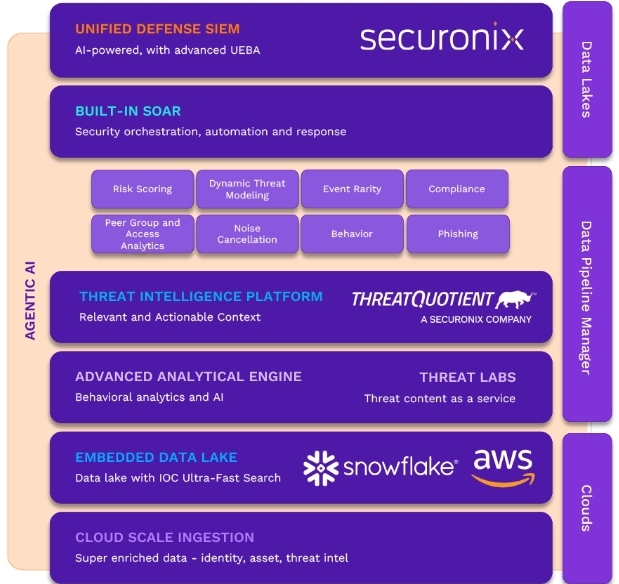
DK: Legacy SOC tools operate in silos, making analysts juggle between disconnected SIEM, SOAR, UEBA, and TIP, which slows detection, increases investigation time, and raises the risk of missed threats due to fragmented context. By unifying SIEM, UEBA, SOAR, and TIP into a single, cloud-native TDIR pipeline, Securonix streamlines operations, reduces tool sprawl, and accelerates time to resolution. Our open architecture ensures seamless integration with the existing ecosystem, giving organizations the flexibility to scale, adapt, and innovate without vendor lock-in. Our industry’s first Unified Defense SIEM powered by agentic AI is purpose-built to decide and act across the threat lifecycle. This cloud-native platform unifies advanced behavioral analytics, curated threat intelligence, and autonomous response to accelerate detection, reduce risk, and eliminate alert fatigue.
Analytics and Automation Redefining the Future of SOCs
Q8. How are analytics and automation redefining the future of SOCs (Security Operations Centers) — transitioning from reactive monitoring to proactive defense?
DK: Traditional SOCs are reactive, relying on analysts to sift through mountains of data to identify threats, where these security approaches are simply unsustainable. The solution to this challenge is found in leveraging AI, machine learning, and behavior analytics in the SOC operations to detect unknown and advanced threats. This is proactive, data-driven, and empowered by cutting-edge AI capabilities, leveraging AI to automate tasks, prioritize threats, and predict potential attacks before they occur. Skilled analysts work alongside AI tools to form a powerful defense, built for the threats of the future. They leverage AI to quickly gain a deeper understanding of the threat landscape and proactively hunt for vulnerabilities.
Q9. Could you talk about the role of human-in-the-loop decision-making in your agentic AI approach? How does this philosophy ensure both speed and ethical accountability in cyber defense?
DK: At Securonix, we believe AI should empower, but never replace, human expertise. Our agentic AI is designed with analysts at the center, ensuring every action, insight, and automation enhances human judgment, providing intelligent support without compromising control. This is our “human-in-the-loop philosophy,” which means while our modular agents automate repetitive tasks, surface enriched insights, and accelerate decisions, they always keep the analyst in control. Whether tuning detection logic, approving a response action, or refining risk scoring, analysts guide the loop. AI supports work, offering explainable decisions, guided responses, and tuneable workflows at every step, and humans own the outcome.
AI-driven Cybersecurity: Top Security Priorities for 2026 and Beyond
Q10. As more banks and fintechs migrate to the cloud, what should their top security priorities be for 2026 and beyond?
DK: With the migration to the cloud, these financial services organizations hold critical customer financial data in structured, semi-structured, and unstructured forms in cloud platforms, in cloud applications, or across a multitude of devices. Securonix integrates with major cloud vendors, providing a holistic view of user activity. It provides monitoring for cloud applications as well as cloud infrastructure.
Monitoring for abuse of privileged accounts is another priority. Securonix provides holistic integration with multiple cloud sources. This helps provide visibility into anomalous authentication patterns, the suspicious aggregation of data, and exfiltration attempts.
Banks and fintech companies should also focus on uncovering insider threats by detecting nefarious or negligent activities that go undetected by traditional security controls. Securonix is the industry-leading insider threat solution, pioneering the use of user and entity behavior (UEBA) analytics for the detection of negligent or malicious activity within an organization.
Customer and employee data privacy is a chief concern for financial services organizations due to the global nature of their business. Securonix Unified Defense SIEM is trusted by many global financial institutions, and over the years, we have perfected robust controls that are specifically designed to address privacy in the global market, including user-definable data encryption and data obfuscation. Mitigating future breaches should also be a key priority for organizations in the financial services sector. When a new breach emerges, Securonix autonomously sweeps through data to help organizations quickly understand their level of exposure.
Envisioning AI-driven Cybersecurity Maturity Evolving in BFSI
Q11. Finally, Dipesh, how do you envision cybersecurity maturity evolving in BFSI, where CX, trust, and security must coexist seamlessly?
DK: Cybersecurity maturity in the BFSI sector will be defined by how seamlessly security integrates with customer experience and trust. As digital banking, fintech ecosystems, and cloud adoption expand, security can no longer be visible friction it must operate intelligently in the background.
From a Securonix standpoint, mature organizations will move toward unified, AI-powered security operations that continuously understand user behavior, assess risk in real time, and respond autonomously where appropriate, while keeping humans in control. This enables financial institutions to protect identities, transactions, and sensitive data without disrupting customer journeys.
Trust will become a measurable outcome of security maturity built through consistent protection, rapid incident response, and transparent governance. Institutions that align security, CX, and resilience into a single operational strategy will be best positioned to sustain growth, regulatory confidence, and long-term customer loyalty.
AI-driven Cybersecurity is a Business Differentiator
As our conversation with Dipesh Kaura reveals, cybersecurity today is no longer just a technology function — it’s a business differentiator. Financial institutions that embed AI-driven intelligence and proactive detection frameworks into their operations are not just protecting assets, but also preserving brand trust and customer confidence.
Securonix’s success lies in its ability to unify visibility, intelligence, and automation — turning reactive postures into predictive defense strategies. For CX leaders and CISOs, this convergence of analytics and automation represents the next big leap in customer trust engineering.
In a digital economy where milliseconds can define the difference between containment and catastrophe, resilience is the new currency of confidence. And as leaders like Dipesh Kaura remind us, the journey to cyber maturity begins with a single shift — from compliance to continuous vigilance.
