
Padma Doree: Reimagining Indigenous Luxury Through a Platform-Led CX Shift
When Fabric Becomes a Platform
“Padma Doree was envisioned not as a conventional brand but as a platform, one that brings fibre, craft, and design into shared conversation.” — Project Leadership, NEHHDC
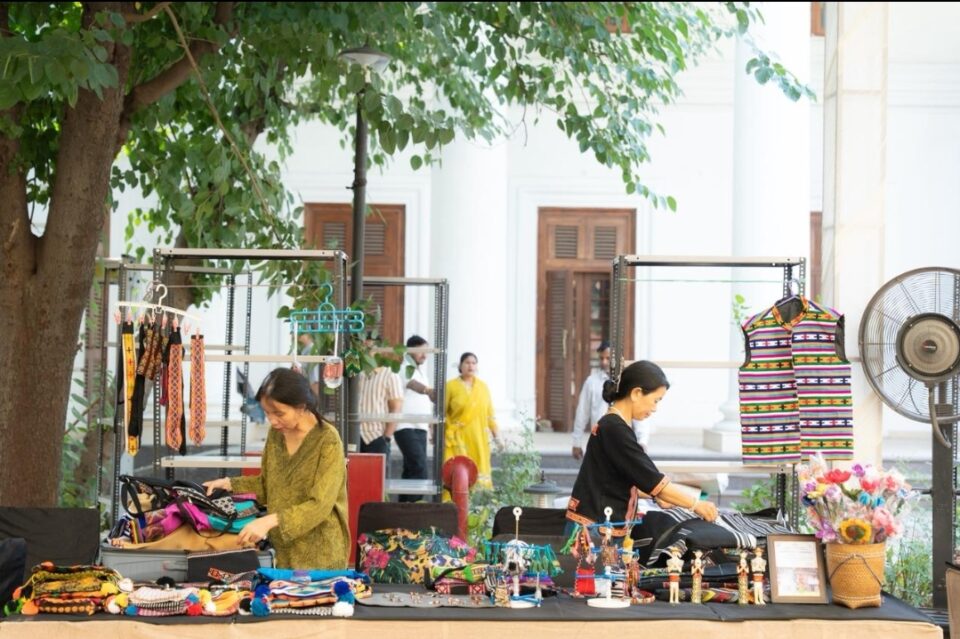
This becomes critical when textiles are no longer evaluated purely on aesthetic or durability, but on origin, process transparency, and cultural meaning. The unveiling in New Delhi—through curated exhibitions, artisan walkthroughs, and performance showcases—positioned the textile not as an endpoint, but as an evolving narrative.
The deeper implication is that Padma Doree reframes fabric as a medium of experience, not just consumption.
Padma Doree and the Shift Toward Experience-Centric Luxury
“Craft was present in process, seen, discussed, and experienced through direct engagement.” — Event Narrative, NEHHDC
From a CX standpoint, this signals a transition:
- From static retail displays → interactive environments
- From designer-led storytelling → artisan-led narratives
- From product acquisition → experience immersion
This is where the shift occurs.
By embedding artisans within the experience layer—physically present, narrating, demonstrating—the initiative dissolves the traditional boundary between creator and consumer. The exhibition format itself becomes a live interface between system and customer.
Strategically, this indicates that future luxury ecosystems will be judged less by exclusivity and more by depth of engagement and authenticity of interaction.
From Regional Silos to Collaborative Systems
Padma Doree changes that equation.
“Padma Doree explored how traditional textile practices could evolve through collaboration across regions, materials, and makers, with artisans remaining central to the process.” — Project Note, NEHHDC
This is not just collaboration. It is system integration.
Operationally, this translates to:
- Cross-regional material exchange
- Shared design frameworks
- Unified narrative positioning
The deeper implication is significant:
Value is no longer created within a region—it is created between regions.
This becomes a blueprint for how India can scale its craft economy without diluting its diversity.
Experience as the New Luxury Currency
Featuring Na U Bnai from Meghalaya and Yash Devle from Madhya Pradesh, the showcase translated fabric into movement and performance—effectively converting material into experience.
“Food was woven into the experience of the opening day.” — Event Note, NEHHDC
Culinary integrations by Chef Kashmiri Nath and Akhoi by Lin Laishram expanded the narrative into gastronomy, reinforcing a key idea:
Luxury is no longer a category. It is an ecosystem of experiences.
From a business standpoint, this has direct implications:
- Higher perceived value → pricing power
- Deeper engagement → longer customer lifecycle
- Multi-format storytelling → broader audience reach
This is where Padma Doree differentiates itself—not through the fabric alone, but through the ecosystem it creates around it.
Technology Without Digital Infrastructure
Instead, it operates through:
- Human coordination
- Knowledge exchange
- Process design
This becomes critical when scalability is needed without compromising authenticity.
At a systems level:
- NEHHDC acts as the orchestration engine
- Artisans function as distributed nodes
- Exhibitions become interaction interfaces
The deeper implication is that innovation here is embedded in structure, not software.
From Buyer to Participant: The CX Transformation
Customers are no longer passive buyers. They become:
- Observers of process
- Participants in narrative
- Carriers of cultural meaning
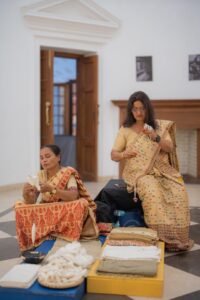
“Artisans from both Northeast India and Madhya Pradesh were present throughout, offering insight into the journey from eri fibre to finished fabric.” — Event Note, NEHHDC
This visibility fundamentally changes perception:
- Craft becomes intellectual and emotional value
- Artisans become experience anchors
- Products become story artifacts
Operationally, this translates to increased trust, higher engagement, and stronger brand recall.
CX is no longer a post-purchase layer—it begins at creation.
Maturity, Gaps, and What Comes Next
Current strengths include:
- Strong physical engagement
- Deep narrative integration
- Authentic artisan presence
Key gaps include:
- Lack of digital traceability
- Limited remote accessibility
- Absence of persistent storytelling platforms
Future evolution may include:
- Digital provenance tracking
- Immersive storytelling (AR/VR)
- Global experience distribution
The deeper implication is that hybrid experience ecosystems will define the next phase of indigenous luxury.
Decision Intelligence for Industry Leaders
Build vs Buy vs Partner:
- Build: High complexity
- Buy: Not applicable
- Partner: Most viable
Risks:
- High coordination complexity
- Narrative fragmentation
Opportunity:
Experience-led differentiation through ecosystem design.
Industry-Wide Implications
- Talent: Artisans as experience creators
- Competition: Story depth over design
- Ecosystem: Collaboration as strategy
The deeper implication is that isolated craft ecosystems may struggle in an experience-driven economy.
The Future of Padma Doree
It represents a new form of Indian luxury that is:
- Rooted in tradition
- Built on collaboration
- Delivered through experience
As global demand for authenticity rises, Padma Doree positions India as a creator of cultural experiences—not just textiles.
Final Takeaway
It does not just introduce a textile.
It introduces a new operating system for indigenous luxury.
