
Sustainability Is the New CX Compass: How Equinix Sets a Global Standard for Sustainable Digital Infrastructure
In today’s experience-driven world, brand reputation no longer depends solely on service speed or network performance. Customers—especially enterprise clients—evaluate companies based on their environmental footprint and ethical responsibility. This shift has placed sustainability at the heart of customer experience (CX) and employee experience (EX) transformation. Sustainable digital infrastructure is one of the key factors.
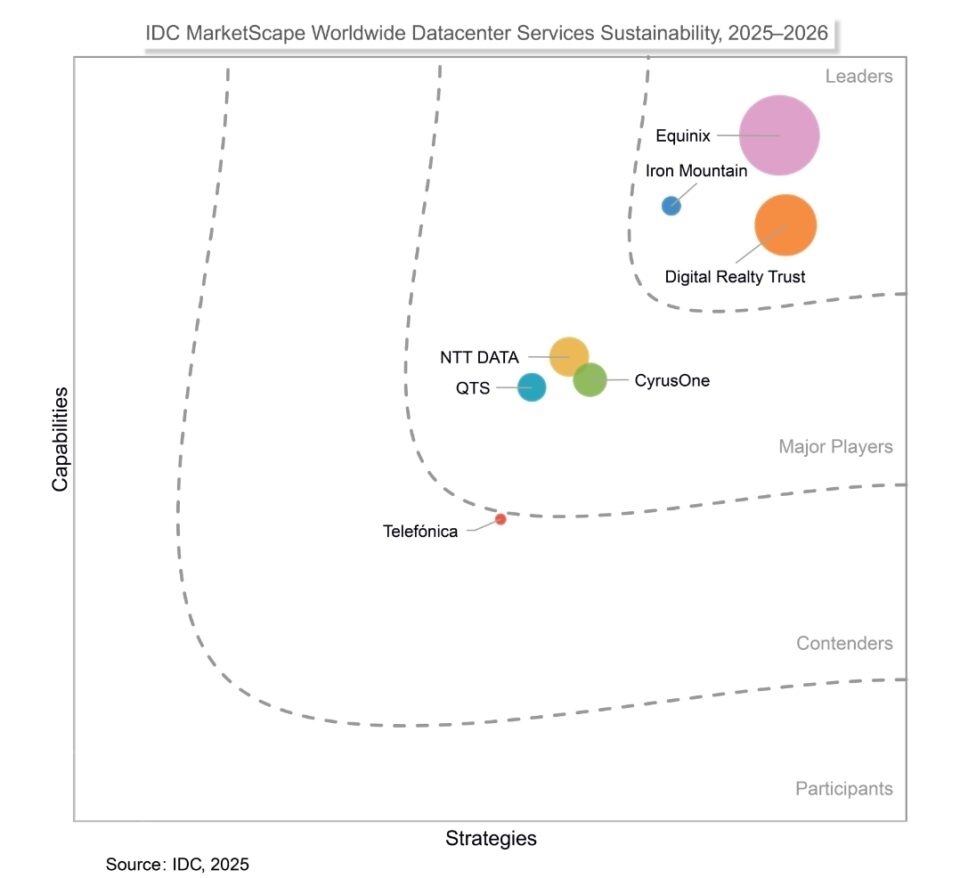
When technology infrastructure itself becomes the enabler of sustainable progress, the experience equation changes dramatically. This is precisely where Equinix—recently named a Leader in the IDC MarketScape: Worldwide Datacenter Services Sustainability 2025–2026 Vendor Assessment—is redefining expectations focusing on sustainable digital infrastructure.
The recognition highlights a growing reality: CX and EX excellence are inseparable from environmental responsibility. As data centers form the digital core of nearly every enterprise journey, their sustainability practices directly influence a company’s impact narrative and brand trust.
Why Sustainability Is a Core CX Metric
Over the past decade, customer expectations around sustainability have evolved from “preferences” to “requirements.” A study by IBM found that 80% of consumers prefer environmentally responsible brands, and more than 60% are willing to pay a premium for sustainable products or services.
For B2B clients in digital infrastructure, sustainability affects not just purchasing decisions but long-term partnerships. As organizations race toward net-zero commitments, their digital infrastructure vendors play a critical role in decarbonization efforts. Choosing the right partner isn’t just a procurement decision—it’s a brand experience statement.
This is where Equinix’s approach stands out. Its commitment to AI-led sustainability, renewable energy innovation, and transparent environmental metrics aligns directly with the experience principles that modern enterprises demand: trust, accountability, and shared progress.
From Cooling Systems to Cloud Commitments: The Anatomy of Sustainable CX
Traditional data centers have long carried the burden of massive energy and water consumption. According to IEA data, data centers consume nearly 1.5% of global electricity, with cooling systems alone accounting for over 40% of total operational costs. Equinix’s response has been both technological and experiential—developing innovations that not only reduce resource usage but enhance customer confidence and narrative control.
1. Water Management Innovation:
Equinix achieved an average Water Usage Effectiveness (WUE) of 0.95 in 2024—one of the lowest in the industry. Its AI-powered water optimization systems minimize dependence on municipal supplies and recycle cooling water in restricted regions. The company also provides customer-facing water reports, offering transparency that strengthens operational trust.
2. Efficient Power Usage:
Equinix posted an impressive 1.39 global annualized Power Usage Effectiveness (PUE) in 2024—a 6% improvement over the previous year. Select facilities report PUE levels under 1.30, aligning with global best-in-class benchmarks. The company now targets a 1.33 global PUE by 2030, signifying continuous optimization.
3. Renewable Energy and Net Zero Commitment:
By 2024, Equinix reached 96% renewable energy coverage globally, with full coverage in the Americas and EMEA. Its goal—100% renewable energy by 2030—is backed by measurable progress. The Science-Based Targets initiative (SBTi) has validated Equinix’s roadmap to achieve net-zero emissions across its value chain by 2040, underscoring scientific credibility and strategic rigor.
India’s Role in the Global Sustainability Framework
In India, where the digital economy and AI adoption are accelerating, the sustainability imperative has local urgency. Manoj Paul, Managing Director of Equinix India, emphasized this alignment in the company’s latest statement:
“As India enters a new phase of digital and AI-led growth, our priority is to ensure that businesses have access to infrastructure that is globally benchmarked, sustainable at scale, and ready for the opportunities of the future.”
Equinix’s initiatives in India include:
- Implementing advanced water-optimized cooling systems and air-cooled chillers, which drastically cut freshwater dependency.
- Expanding renewable and low-carbon portfolios, such as the Yavatmal solar farm going live in November 2025.
- AI-ready design principles embedded in new builds, enabling predictive infrastructure efficiency.
These advances don’t just sustain facilities—they build confidence for customers navigating India’s next-gen CX landscapes.
Data Centers as Experience Enablers
The modern data center is no longer a silent engine in the background—it’s a visible actor in the brand experience ecosystem. Every kilowatt saved, every liter of water recycled, contributes to a more ethical digital value chain.
For customer experience leaders, Equinix’s approach provides three lessons:
- Transparency builds loyalty: When providers give clients access to granular environmental data—covering energy, carbon, and water consumption—they become trusted sustainability partners, not just infrastructure suppliers.
- Sustainability drives differentiation: As cloud and AI ecosystems converge, sustainable operations offer a brand-defining edge. It’s not simply about uptime—it’s about “green uptime.”
- Circular design enables agility: Waste heat reuse, circular resource cycles, and green financing ensure that sustainability doesn’t slow innovation—it scales it.
AI, Efficiency, and the Future of Sustainable Infrastructure
As AI workloads surge, data centers must balance computational density with environmental control. IDC’s assessment credits Equinix’s AI-ready infrastructure for integrating sustainability intelligence across design and operations.
Equinix’s edge AI model leverages renewable energy grids and heat reuse systems to run distributed AI workloads efficiently. In cities like Helsinki, Toronto, and Paris, the company exported 14.5 GWh of residual heat in 2024—a 245% increase over the previous year—contributing power back to urban heating systems. This is sustainability intelligence in motion.
Moreover, Equinix’s green financing portfolio, valued over $9 billion since 2020, underwrites investments in green buildings, renewable technologies, and next-generation climate-focused infrastructure. This capital-driven momentum demonstrates how enterprise-scale transformation aligns with sustainability-led customer assurance.
Decarbonization as a Shared Experience
No CX or EX initiative today can be considered holistic without environmental integration. Employee pride in working for sustainable organizations directly influences advocacy and retention. Customers, investors, and regulators increasingly converge on one demand: measurable decarbonization.
Equinix’s customer decarbonization instruments—including scoped emissions reports and renewable tracking dashboards—turn sustainability into a shared journey. Clients can assess how their infrastructure choices contribute to collective climate goals, reinforcing trust and long-term loyalty.
This convergence of data, transparency, and purpose isn’t just an operational milestone—it’s the evolution of experience leadership.
The CX/EX Transformation Roadmap for 2026
Looking ahead, CX and EX leaders can draw several actionable takeaways from Equinix’s sustainability strategy:
- Embed sustainability in every experience metric. Treat energy and resource metrics like uptime and SLAs—they reflect organizational reliability.
- Design for transparency. Give stakeholders access to verifiable data about your environmental footprint. Trust grows when information flows.
- Leverage AI for sustainability. Use predictive modeling to optimize resource allocation, cooling, and supply chain efficiency.
- Align green financing with CX investment. Sustainable capital allocation can advance both infrastructure and perception.
- Transform EX with purpose. Empower teams through sustainability-driven missions; pride fuels long-term engagement.
Final Reflection
As digital enterprises expand globally, sustainability has become the defining measure of experience excellence. Equinix’s recognition as an IDC MarketScape Leader signals more than operational competence—it represents a shift in what customers value: cleaner growth, transparent partnerships, and credible environmental innovation.
In the end, every data packet, transaction, and line of code flows through an infrastructure ecosystem. When that ecosystem itself functions sustainably, it doesn’t just support experiences—it elevates their meaning.
